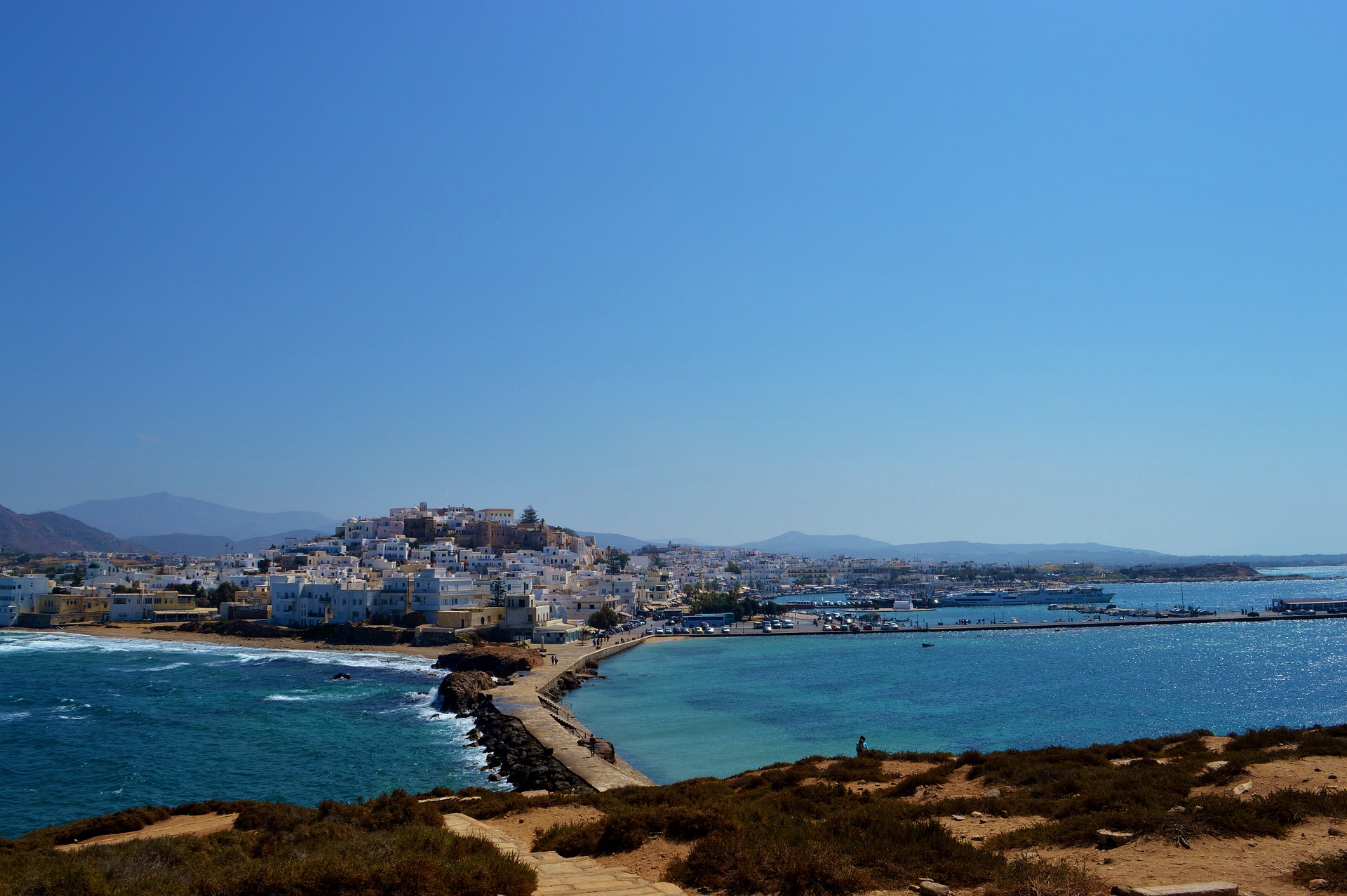
Best Things to Do in Naxos: A Local's Guide to the Island
I've been coming to Naxos every summer since I was a kid -- my family is from Koronos, a tiny mountain village most tourists never hear about. Over 15 years ago, I moved here for good. And yet, this island still surprises me.
Naxos isn't Santorini. It's not Mykonos. There are no cruise ships blocking the harbour, no influencers fighting for the same sunset spot. What you get instead is the largest island in the Cyclades, with mountains, valleys, endless beaches, and some of the best food in Greece -- without the crowds.
Here are my 10 favourite things to do on the island. No tourist traps, no generic lists -- just places and people I genuinely love.
1. Sail the Small Cyclades with Xanemo Sailing
I co-founded Xanemo Sailing back in 2012 with my husband. We sold the company in 2021, but I still recommend it to every single guest who asks me what to do with their day. That should tell you something.
Their day cruises take you south through the Small Cyclades -- Koufonisia, Iraklia, Schinoussa -- those tiny islands scattered between Naxos and Amorgos that most people only see on a map. The kind of places where the ferry comes once a day, the beaches have no name, and the water is so clear you can count the pebbles from the boat.
You leave Naxos harbour in the morning. By mid-morning, you're anchored in a bay that looks like it was drawn by someone who's never seen a bad beach. You swim, you dry off on deck, you eat. The crew knows these waters like the back of their hand -- they'll find you a cove with no one else in it, even in July. By the time you sail back into the harbour at sunset, you'll feel like you've been away for a week.
If you only do one thing in Naxos, make it this.
2. Get Lost in Koronos
This is where my family comes from, and I've been walking these streets since before I could read the signs -- not that there are many. Koronos is a mountain village built into the hillside at about 550 metres above sea level, with marble-paved alleys so narrow that no car can pass. You have to park outside the village and walk in. That's the first sign you're somewhere different.
Koronos was an emery mining village for centuries. The whole economy of the place revolved around the stone they pulled out of the mountain. You can still see the old mine entrances if you know where to look. The village empties a bit during winter now, but in summer it comes back to life -- doors open, grandmothers sit outside, someone is always cooking something.
There's no museum, no ticket booth, no guided tour. Just wander. Climb the steps between the houses. Follow the alleys until they turn into footpaths. Say hello to whoever is sitting outside their door -- they'll probably wave you over. When your legs give up, head to the main square, sit at a taverna, and order whatever they're cooking that day. Don't ask for a menu. Just eat what comes.
Most visitors to Naxos never make it past the coast. Koronos is the Naxos they're missing.
3. Take a Cultural Food Tour with Philema
There are a lot of "food experiences" popping up on the Greek islands these days. Most of them are fine -- a bit of olive oil tasting, a cooking class, some nice photos for Instagram. Philema is different. You can tell the people behind it actually care about what they're doing, and it shows in every detail.
Their tours are cultural as much as culinary. They don't just take you to taste things -- they take you into the lives of the people who make them. One of the best tours brings you to a working farm where you make cheese alongside the farmers. Not a demonstration, not a show -- you're there with your hands in the curd, learning the same process that's been done on this island for hundreds of years. The farmer doesn't perform for tourists. He just does what he always does, and you happen to be there doing it with him.
That's what makes Philema stand out. It's not a cooking class dressed up as culture. It's a real window into how people here actually live and eat, and you walk away with something you can't get from a restaurant -- an understanding of where the food on your plate comes from and whose hands shaped it.
4. Swim at Alyko Beach
I got married at Alyko, so it holds a special place for me -- but it would make this list regardless.
Alyko sits on the southwest coast of the island, inside a protected cedar forest. The area is untouched by development -- no beach bar, no sunbed rental, no parking lot with a fee, no music. Nothing. The road turns to dirt before you get there, you park under the trees, and you walk. The ground shifts from pine needles to dry earth to sand, and then suddenly you're at the water.
The beach itself is long and curved, with fine sand and shallow water that stays warm well into October. Because there's no infrastructure, it never gets truly crowded -- even in peak season, you can find a stretch of sand with no one near you. The cedar trees come almost to the water's edge in some places, so you can sit in the shade without an umbrella.
It's one of the few beaches on the island that still feels completely wild. No one is trying to sell you anything. No one is playing music you didn't ask for. Just the water, the trees, and whatever book you brought.
Bring your own water and a towel. That's all you need.
5. Watch the Sunset at Plaka Beach
Plaka is well-known, and for good reason -- it's a long, wide stretch of sand that runs for kilometres along the west coast, facing directly into the sunset. On a clear evening, the sky goes through every shade of orange and pink you can imagine, and because the beach is so wide and flat, you can see it all without craning your neck or fighting for a spot.
But what most people don't know is Cedar Cafe, tucked right on the beach at the quieter end. It's not a beach club, not a party spot -- just a well-designed space with good cocktails and the kind of atmosphere that makes you want to stay longer than you planned.
Get there around 7pm in the summer. Take your shoes off. Order something cold. The music is low enough that you can hear the waves. The light starts to change around 7:30, and for the next hour, you just sit there watching the sky do its thing. Nobody rushes you. Nobody drops a bill on your table. It's one of those places where nobody checks the time, and by the end of the evening, you've made a memory that has nothing to do with doing anything at all.
6. Explore Chalki and Eat at a Taverna
Chalki was the capital of Naxos for centuries -- long before Chora took over. It's a small inland village about 20 minutes from the port, sitting in the middle of the Tragaea valley surrounded by olive groves. The village is full of Venetian tower houses and old neoclassical buildings, and it has that specific quality of a place that was once very important and is now quietly content with being beautiful.
The main street is lined with small shops -- some selling local products, some selling things you don't need but enjoy looking at. The Citron distillery is worth a stop if you're curious about kitron, the local liqueur made from the leaves of the citron tree. Naxos is the only place in Greece where it's still produced, and tasting it in the place where it's made is a different experience from ordering it at a bar.
But the real reason to come to Chalki is to eat. The village square has a handful of tavernas, and honestly, you don't need a specific recommendation. They're all good. The cook that day is using tomatoes from down the road, cheese from a farm 10 minutes away, and olive oil from the trees you drove past to get there. Order a few small plates, sit in the shade, and take your time. Chalki doesn't reward people in a hurry.
7. Let Your Kids Run Wild at Smirili
If you're travelling with children, Smirili Nature Play is unlike anything else on the island -- and honestly, unlike most things you'll find anywhere in Greece.
It's not a kids' club. It's not a playground with plastic slides and rubber flooring. Smirili is an outdoor space designed around the idea that children learn and grow best when they're free to interact with nature on their own terms. Unstructured, creative, messy play -- the kind that used to be called "playing outside" before we all got nervous about it.
The space is thoughtfully designed but intentionally wild. Kids build things with sticks, dig in the dirt, climb what they want to climb, and invent games that no adult would think of. There's something deeply reassuring about watching your child spend two hours completely absorbed in a pile of rocks and mud, not once asking for your phone or a screen.
It's also a gift for parents. While your kids are running around being kids, you get to sit, breathe, and remember that a holiday doesn't have to be a series of scheduled activities. Smirili understands something that most family tourism has forgotten: children don't need entertainment. They need freedom.
8. Hike with Off the Beaten Trail
Most people don't think of Naxos as a hiking island. They come for the beaches, maybe rent a quad bike, and stay on the coast. But the interior of Naxos is extraordinary -- green valleys, marble-paved paths that are centuries old, Byzantine churches hidden in gorges, villages connected by footpaths that predate every road on the island.
The problem is, most of this is unmarked. The old paths aren't on Google Maps. The trailheads don't have signs. If you go alone, you'll probably end up on a goat track wondering where the path went. That's where Off the Beaten Trail comes in.
They know these paths better than anyone. Their guided hikes take you through parts of the island that feel genuinely untouched -- places where the only sound is the wind and the bells on someone's goats. They'll tell you the history of the paths, point out plants you'd walk right past, and take you to viewpoints that make the whole island look like a painting.
If you're the kind of traveller who prefers boots over flip-flops, and if you want to see a side of Naxos that 95% of visitors never will, this is your thing. Book early in the season -- they get busy.
9. Dine Under the Olive Trees
I'll keep this honest -- this is our own place, so take it with that in mind. But if you're looking for something different from a restaurant, we host small private dinners in our olive grove in Sangri.
The idea is simple: a long table under old olive trees, food cooked in a wood-fired oven using ingredients from the land around us, and unlimited Naxian wine. No menu, no waiters, no background music that isn't crickets. We cook what the season gives us, and the evening unfolds at its own pace.
It's not a restaurant. It's an evening -- the kind where strangers become friends over a shared table, where the conversation gets better with every glass, and where you suddenly realise it's midnight and nobody wants to leave.
More about our private dining here.
10. Spend a BBQ Night Under the Stars
For something more laid-back than a sit-down dinner, we also do BBQ nights in the same olive grove. The setup is simpler -- fire, grilled meat, salads from the garden, bread, and the kind of sky you only get when there are no streetlights for miles.
There's something about eating outdoors around a fire that strips away all the formality. People relax faster. Kids run around between the trees. Someone always ends up poking the fire with a stick. It's the simplest version of what we do, and honestly, sometimes the simplest things are the best.
If the private dining sounds like a special occasion, the BBQ is the Tuesday night version -- easygoing, unpretentious, and exactly what a summer evening should feel like.
More about our BBQ nights here.
One Last Thing
If you can, avoid August. I know -- it's when most people have their holidays. But Naxos in August is a different island. The beaches are packed, the tavernas are rushed, the roads are full, and everything costs a little more and feels a little less.
The island is at its most beautiful in June and September. June is when everything is still green, the water is warming up, and the season is just getting started -- the energy is fresh, the locals are happy to see you, and you'll have most beaches to yourself. September is warmer, the sea is at its best, and there's a golden quality to the light in the evenings that's hard to describe. October can be beautiful too, if you don't mind the occasional rainy day.
Naxos doesn't need a sales pitch. It just needs you to show up, slow down, and pay attention. The island will do the rest.
-- Depy